



Medical disclaimer: This article is educational and does not replace advice from your oncology care team. Always talk to your doctor before making decisions about scalp cooling, wig timing, or anything related to your treatment.
Table of Contents
- Key Takeaways
- How Common Is Hair Loss During Chemotherapy?
- Should You Buy a Wig Before or After Your Hair Starts Falling Out?
- Hair Topper or Full Wig: Which Do You Actually Need During Chemo?
- Human Hair vs. Synthetic Wigs for Chemo Patients: Which Is Right for You?
- What to Look for in a Wig When Your Scalp Is Sensitive
- Can Scalp Cooling Prevent Hair Loss Altogether?
- How to Pay for a Wig: Insurance, Tax Deductions, and Free Wig Programs
- Choosing Color, Length, and Style That Feels Like You
- Common Comfort Concerns — and How to Solve Them
- Frequently asked questions
- Final Thoughts
Key Takeaways
- About 65% of chemotherapy patients experience some degree of hair loss, and roughly 1 in 3 breast cancer survivors report long-term or permanent thinning (American Cancer Society).
- Buy your wig before hair loss starts, not after — it's easier to match your natural color and texture, and most oncology teams recommend it.
- Most chemo patients need a full wig, not a hair topper — chemo typically causes widespread or total hair loss, while toppers are built for partial thinning.
- A wig can qualify as a tax-deductible "cranial prosthesis" under IRS rules, and many insurance plans reimburse part of the cost when it's prescribed by a physician.
- Free and low-cost wig programs exist through hospitals, nonprofits, and community programs — you may not have to pay full price at all.
How Common Is Hair Loss During Chemotherapy?
Hair loss is one of the most expected — and most feared — side effects of chemotherapy, and it's more common than many patients realize. Chemotherapy targets fast-dividing cells throughout the body, including the hair follicles, which is why hair loss (medically called chemotherapy-induced alopecia) affects the majority of people on chemo, though the exact degree depends heavily on the drugs and dosing used in your specific regimen.
According to the American Cancer Society, about 1 in 3 breast cancer survivors experience long-term or permanent hair loss after treatment, and just over 1 in 3 childhood cancer survivors report the same. Hormone therapy alone — even without chemotherapy — causes hair thinning in roughly 1 in 4 patients. For most people on standard chemo schedules given every two to three weeks, ACS notes that hair loss usually begins two to three weeks after the first treatment cycle and peaks by the end of the second cycle.
For most patients, this is temporary. Regrowth typically begins three to six months after chemotherapy ends, with a mean onset around 3.3 months, according to research published by the National Institutes of Health. But not everyone regrows a full head of hair right away — a three-year prospective cohort study of breast cancer patients found that 22.1% experienced partial permanent hair loss and 1.7% experienced complete permanent hair loss, a condition doctors call persistent chemotherapy-induced alopecia (pCIA), which is more strongly linked to certain drug classes like taxanes and anthracyclines.
The emotional weight of this side effect is well documented. In a widely cited patient survey referenced by the NIH, 47% of women identified hair loss as the most traumatic side effect of their treatment — more distressing, for many, than nausea or fatigue — and 8% said they had considered declining chemotherapy specifically because of the anticipated hair loss. That statistic alone is why so many cancer centers now build wig planning into standard supportive care, not as an afterthought.
Should You Buy a Wig Before or After Your Hair Starts Falling Out?
The clearest, most consistent advice from oncology sources is to select your wig before hair loss begins, not after. The American Cancer Society specifically recommends taking photos of your current hairstyle and, if possible, saving a lock of hair from the front or top of your head — the lightest area — so a stylist can match your natural color and texture while it's still easy to see. Dana-Farber Cancer Institute echoes this, recommending patients visit a stylist while they still have their own hair so it can be assessed for density and hairline shape before treatment changes it.
There's a practical fitting reason too: ACS notes that your head size can shrink by as much as a full size once hair is lost, so wigs should be adjustable rather than a rigid, one-time fit. Shopping ahead of time also gives you room to try a few options without the added stress of doing it while actively losing hair.
This is exactly why Dimples Hair offers a free virtual consultation and a free color-matching service — so you can start the process the moment you're ready, whether that's the week of diagnosis or the week before your first infusion. If you'd rather work through it with structured guidance, the American Cancer Society's Look Good Feel Better program offers free, licensed-cosmetologist-led workshops (in person and virtual) that cover wigs, scarves, and skin/makeup changes during treatment — a genuinely useful complement to shopping directly with a specialist.
Hair Topper or Full Wig: Which Do You Actually Need During Chemo?
This is one of the most common points of confusion, and getting it right saves you money and disappointment. Hair toppers are designed to blend with your own remaining hair to add coverage and volume over thinning areas — they work best when you still have a base of hair to attach to and blend into. Full wigs are designed to be worn alone, without relying on existing hair underneath.
Because standard chemotherapy regimens typically cause widespread or total scalp hair loss rather than partial thinning, a full wig is generally the more appropriate choice for most chemo patients — there usually isn't enough remaining hair for a topper to blend with. Toppers tend to be a better fit for hormone-therapy-related thinning, alopecia areata with patchy (not total) loss, or general thinning unrelated to chemotherapy. If you're using scalp cooling (more on that below) and retain a meaningful amount of hair, a topper could still be worth discussing with your stylist — but for anyone anticipating significant loss, planning around a wig is the safer bet.
If you want a deeper side-by-side, our guide on hair toppers vs. wigs breaks down the mechanics of each in more detail — worth a read once you've narrowed down which category fits your situation.
Human Hair vs. Synthetic Wigs for Chemo Patients: Which Is Right for You?
Both American Cancer Society and Dana-Farber point to the same core tradeoff: human hair wigs offer the most natural look and the most styling flexibility, while synthetic wigs are lighter, less expensive, and require far less daily upkeep — a real advantage when chemo-related fatigue makes even simple routines feel like a lot.
| Human Hair Wig | Synthetic Wig | |
|---|---|---|
| Look & feel | Most natural, can be styled like your own hair | Very natural at first wear, pre-styled |
| Heat styling | Can be curled/straightened | Cannot tolerate most heat tools (unless heat-friendly synthetic fiber) |
| Daily maintenance | Higher — needs washing, conditioning, restyling | Lower — holds its style, less daily effort |
| Best for | Patients who want to change styles or have energy for upkeep | Patients managing fatigue who want low-effort, ready-to-wear hair |
| Typical cost | Higher | Lower |
Dimples Hair carries both directions of this tradeoff: our Hera human hair lace front wigs for patients who want a wig they can style and adjust over time, and our synthetic wigs for anyone who wants something low-maintenance that still looks polished on tired days. Neither option is "better" across the board — it depends on your energy levels, budget, and how much you want to style day to day. For more detail, our existing synthetic vs. human hair guide walks through the full comparison.
What to Look for in a Wig When Your Scalp Is Sensitive
Chemo can leave your scalp more sensitive to heat, cold, sun, and friction, so wig construction matters more than it might for a fashion wig purchase. Mayo Clinic's guidance on chemotherapy and hair loss specifically notes the scalp can become vulnerable during treatment, and both ACS and Dana-Farber recommend a few concrete things to look for:
- Hand-tied or monofilament caps. ACS describes hand-tied construction as ideal for a sensitive scalp because it's lightweight and reduces the friction and pressure a traditional wefted cap can create.
- A cotton liner or skullcap underneath. Dana-Farber recommends placing a soft cotton barrier between your scalp and the wig cap to absorb perspiration and add a layer of comfort.
- Adjustable sizing. Since your head can shrink up to a full size as hair is lost, look for adjustable straps or a cap that can be resized rather than a fixed fit.
- Breathability over heavy construction. Denser, non-breathable caps trap heat; lighter, mesh-based caps let your scalp breathe.
Several of our Hera and Clio styles use hand-tied and mono-top construction for exactly this reason, and our wig cap size chart can help you find an adjustable, comfortable fit before you buy.
Can Scalp Cooling Prevent Hair Loss Altogether?
Scalp cooling — often called "cold cap" therapy — is a real, FDA-cleared option that can reduce or prevent chemo-related hair loss for some patients, though it's not guaranteed to work for everyone. Devices like DigniCap and the Paxman Scalp Cooling System were cleared by the FDA for use during chemotherapy, and the results from pivotal trials are meaningful: in the DigniCap study covered by the National Cancer Institute, 4% of women using the device had no hair loss at all, and 61.4% had less than 50% hair loss — compared with 100% of the control group losing more than half their hair. In a larger follow-up study across solid tumors, 65% had no or only mild hair loss, and just 28% ultimately chose to wear a wig at all.
Scalp cooling works best for solid tumors — breast cancer in particular — treated with taxane-based or non-anthracycline regimens, and it's less effective with heavier anthracycline-based chemo. It's also not free by default: historically, self-pay costs ranged from about $1,500-$2,400 per cycle, though coverage has been expanding. New CPT billing codes took effect January 1, 2026, and CMS finalized updated Medicare payment rates for scalp cooling procedures that year, so it's increasingly likely to be at least partially covered — ask your oncology team whether your specific insurance plan includes it, and whether your treatment regimen is a good candidate before committing.
How to Pay for a Wig: Insurance, Tax Deductions, and Free Wig Programs
Cost is often the first worry people have, and there's more financial help available than most patients expect.
Ask for a "cranial prosthesis" prescription, not a "wig." When your oncologist or a nurse navigator writes documentation for insurance purposes, ACS recommends using the term "cranial prosthesis" rather than "wig" — this is the term insurers use to classify a medically necessary hair replacement, and it's billed under HCPCS code A9282. This single word choice can be the difference between a claim being processed and one being denied outright.
Original Medicare typically does not cover wigs, though some Medicare Advantage plans offer limited benefits — check your specific plan's coverage documents or call member services directly, since benefits vary widely by carrier and plan.
Your wig may be tax-deductible. Per IRS Publication 502: "You can include in medical expenses the cost of a wig purchased upon the advice of a physician for the mental health of a patient who has lost all of their hair from disease." That deduction applies only to the portion of your total medical expenses that exceeds 7.5% of your adjusted gross income, claimed on Schedule A. We've written a full walkthrough in how to claim tax deductions for wigs if you want the complete process.
Free and reduced-cost wig programs are real and worth pursuing before you pay full price:
| Program | What it offers | Source |
|---|---|---|
| Cleveland Clinic Wig Boutique | Donation-funded, no-cost wigs, hats, and accessories | |
| CancerCare Free Wig Program | Free wig/prosthesis clinics and hospital partnerships nationwide | |
| Dana-Farber "Friends' Place" | Hair prosthesis and wig services for patients | |
| Look Good Feel Better | Free workshops covering wigs, headwear, and skin/makeup changes |
Note: the American Cancer Society's EverYou wig and headwear program was discontinued, with new purchases ending April 1, 2026 — if you've seen it referenced elsewhere, know that ACS now directs patients to its general resource search and to the programs above instead.
Choosing Color, Length, and Style That Feels Like You
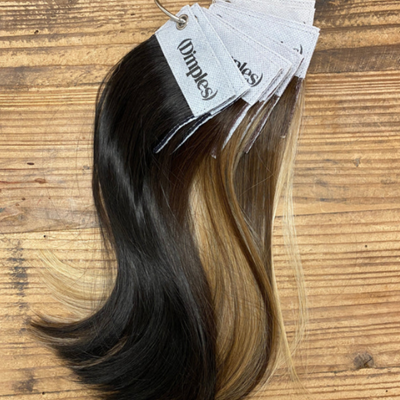
Matching your wig to your natural color and length is easiest before treatment starts, while your stylist can still see your real hair. ACS's practical tip — saving a lock of hair from the lightest area, like the front or top of your head — gives a specialist an exact reference point rather than a guess from memory or an old photo. Our free color-matching service is built around exactly this scenario, and our hair length chart can help you decide whether to go shorter, keep your current length, or use this as a chance to try something new — some patients find a shorter style easier to manage during treatment, while others want their wig to feel as close to "normal" as possible.
Common Comfort Concerns — and How to Solve Them
Real patient discussions on forums like breastcancer.org and Breast Cancer Now consistently raise the same handful of concerns, and each has a practical fix:
- "My wig feels hot and makes me sweat." Choose a hand-tied or monofilament cap for breathability, and wear a thin cotton liner underneath to absorb moisture.
- "It's itchy against my scalp." A cotton liner also helps here, and softer, more breathable cap materials reduce direct friction against sensitive skin.
- "It shifts or feels loose." Remember your head size can shrink as hair is lost — an adjustable cap, sized against our wig cap size chart, solves most fit complaints without needing tape or glue.
- "I don't know if I'm choosing the right one." This is what consultations are for — a free virtual consultation lets you talk through options with someone who isn't guessing on your behalf.
Frequently asked questions
Do all chemotherapy patients lose their hair?
No. Roughly 65% of chemo patients experience some hair loss, but the exact likelihood and severity depends on the specific drugs, dosage, and schedule used in your treatment plan. Ask your oncology team what to expect from your specific regimen.
Should I get a hair topper or a full wig for chemo?
Most chemo patients need a full wig, since chemotherapy typically causes widespread or total hair loss rather than the partial thinning that toppers are designed to blend with. Toppers are usually a better fit for non-chemo thinning or hormone-related hair loss.
Will insurance pay for my wig?
Many insurance plans reimburse part of the cost when a physician prescribes it as a "cranial prosthesis" (not a "wig"), billed under code A9282. Coverage varies by plan, and Original Medicare typically doesn't cover it, though some Medicare Advantage plans do.
Can I deduct the cost of a wig on my taxes?
Yes, potentially. Per IRS Publication 502, a wig purchased on a physician's advice for a patient who has lost all hair from disease can be included as a medical expense, deductible for the portion exceeding 7.5% of your adjusted gross income.
When should I buy my wig — before or after I start losing hair?
Before. Oncology sources consistently recommend shopping while your natural hair is still present, so a stylist can accurately match color and texture, and because your head size can change once hair loss begins.
Are there free wig programs for cancer patients?
Yes. Programs like the Cleveland Clinic Wig Boutique, CancerCare's Free Wig Program, and Dana-Farber's Friends' Place offer free or low-cost wigs, and Look Good Feel Better offers free workshops covering wig and headwear guidance.
Final Thoughts
Losing your hair during cancer treatment is hard, and choosing a wig shouldn't add to that stress. The most useful thing you can do is start early — talk to your oncology team about what to expect, take advantage of free resources like Look Good Feel Better, understand your insurance and tax options before you buy, and choose a wig built for comfort, not just appearance. If you'd like to talk through your specific situation, book a free virtual consultation with our team — no pressure, no guesswork, just honest guidance from people who've helped thousands of women through exactly this.
About the Author
The Dimples Hair Team consists of wig and hair topper specialists with decades of experience in alternative hair and hair loss education. Each article is written or reviewed by our team to ensure accurate, practical guidance informed by real consultation and styling experience.
Hera 23" | Remy Human Hair Lace Front Wig (Hand-Tied)

$3,290.00
$4,700.00
Meet the longest length in our Remy wig collection: 23 inches of Remy human hair, handcrafted for life, movement, and goddess-tier energy. Why We Love Hera 23": PerFit® for barely-there wear: A hand-tied cap lined with silky-soft comfort—so intuitive, it feels… read more
Hera 19" | Remy Human Hair Lace Front Wig (Hand-Tied)

$2,309.00
$3,299.00
Hera 19" is made for bold beauty and everyday wear. With flowing 19" of Remy human hair and a seamless lace front, this hand-tied wig gives you freedom to move, part, and style — all without compromise. PerFit® Cap Construction:… read more
Hera 15" | Remy Human Hair Lace Front Wig (Hand-Tied)

$2,099.00
$2,999.00
Hera 15" is a medium-length Remy human hair lace front wig designed to deliver full coverage, natural movement, and all-day comfort. Ideal for women experiencing hair loss, thinning, or alopecia, it blends luxury craftsmanship with a breathable, lightweight fit. The… read more
Hera 8" | Remy Human Hair Lace Front Wig (Hand-Tied)

$1,469.00
$2,099.00
Hera 8" is a short Remy human hair lace front wig designed for full coverage with a soft, realistic look and barely-there feel. Perfect for women experiencing hair loss, thinning, or alopecia, it blends luxury craftsmanship with everyday comfort. The… read more