




Hair loss is a normal biological process, yet it often raises a simple and important question: how much hair loss is normal? Understanding what typical shedding looks like can help distinguish everyday hair fall from changes that may need closer attention.
Hair naturally sheds as part of a continuous growth cycle. Some daily hair loss is expected, even in healthy scalps, and variations in shedding can occur due to routine factors like washing frequency, styling habits, or seasonal changes.
Because hair loss can be influenced by genetics, stress, hormones, and overall health, it doesn’t look the same for everyone. Knowing what’s considered normal — and what may be outside that range — provides a clearer foundation for navigating hair changes with confidence and informed expectations.
Table of Contents
- Understanding Hair Growth and Shedding: The Science Behind Hair Loss
- How Much Hair Loss is Normal Every Day?
- Common Causes of Hair Loss: What’s Typical and What’s Not
- Hair Loss Stages: What to Expect Over Time
- When Hair Loss Feels Like Too Much: Signs to Watch For
- When to Seek Professional Help
- Final Thoughts: Understanding What’s Normal — and What Comes Next
- FAQs
Understanding Hair Growth and Shedding: The Science Behind Hair Loss
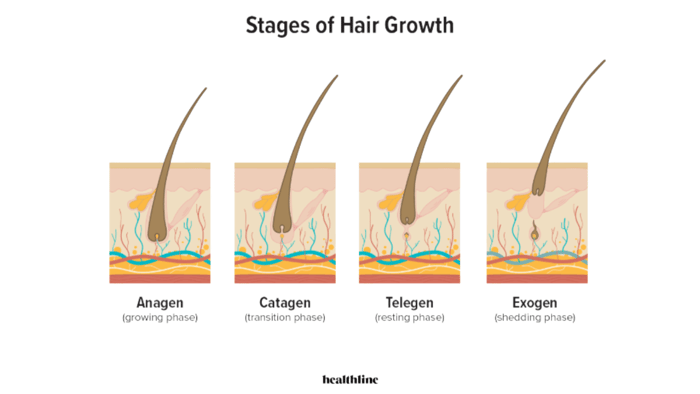
Stages of hair growth. Source: healthline.com
To understand hair loss, it's important to explore how hair grows and sheds. Hair growth occurs in cycles, which involve several key stages.
The hair growth cycle consists of three main phases:
- Anagen Phase: This is the growth phase, lasting anywhere from two to seven years. Hair actively grows longer during this time.
- Catagen Phase: Known as the transition phase, this stage lasts for about two weeks. Hair growth slows, and the hair follicle shrinks.
- Telogen Phase: This is the resting phase, lasting around three months. Hair eventually falls out to make way for new growth.
It's completely normal for hair to shed during the telogen phase. In fact, this is when old hairs naturally fall out.
Usually, 85-90% of our hair is in the anagen phase, which explains why some hairs grow longer than others. Each hair on your head can be in a different phase.
Remember, shedding is a part of healthy hair cycles. Understanding this can help us recognize when hair loss is simply a part of life’s cycle rather than a cause for concern. This understanding lays the foundation for exploring solutions tailored to individual needs.
How Much Hair Loss is Normal Every Day?
It's common to wonder, "How much hair loss is normal every day?" The reassuring truth is that losing between 50 to 100 hairs daily is normal.
Hair shedding might sound a lot, but remember, our scalp hosts about 100,000 hair strands. As old hairs fall, new ones grow, maintaining a balanced density.
Several factors influence daily shedding, making the pattern quite personal. Changes in season, age, and daily hair care practices can all play a role. For instance, some people experience increased shedding during certain times of the year.
The amount of hair you lose can also be linked to your health and stress levels. A balanced diet, adequate hydration, and stress management can help maintain healthy hair.
If you notice more shedding than usual, it doesn’t necessarily indicate a problem. However, understanding your shedding pattern is key to recognizing changes that might require attention.
Common Causes of Hair Loss: What’s Typical and What’s Not
Understanding the causes of hair loss helps demystify the experience. Many factors can contribute to thinning hair, with some being more common than others.
Genetics plays a significant role in how much hair loss a person may experience. If hair thinning runs in the family, you might notice similar patterns.
Hormonal changes, particularly in women during pregnancy or menopause, often lead to temporary hair loss. Thankfully, these changes are typically reversible over time.
There are also lifestyle factors. Chronic stress, for instance, is a known trigger for shedding more hair than usual. Effective stress management can reduce the impact of stress-related hair loss.
Here are some other common causes of hair loss:
- Nutritional deficiencies
- Medical conditions such as thyroid disorders
- Certain medications
- Hairstyle choices that pull at the scalp
While some hair loss causes are typical, others might signal an underlying issue. If your hair loss seems sudden or severe, consider seeking professional advice. Understanding what's normal versus what may require attention helps you make informed decisions about your hair care.
Hair Loss Stages: What to Expect Over Time
Hair growth follows a natural cycle, consisting of distinct stages. Understanding these stages can clarify what is normal and what isn't.
The first stage is the anagen phase, also known as the growth phase. During this period, hair actively grows and can last several years.
Next is the catagen phase, a short transitional phase lasting a few weeks. Here, hair growth stops, and the follicle shrinks.
The final stage is the telogen phase, the resting phase, where hair sheds naturally. New hair then begins to grow, continuing the cycle.
These stages ensure that at any time, hair is at different points in its life cycle. This is why it's common to find hair on your pillow or in your brush. If you notice more shedding without regrowth, it might be worth delving deeper into the hair cycle's implications or seeking expert advice. Being informed about these stages can empower you to recognize what's routine versus what might need attention.
When Hair Loss Feels Like Too Much: Signs to Watch For
While some hair loss is normal, there are indicators suggesting it's time for closer inspection. Noticing these signs can help you act quickly.
If you observe more hair than usual in your shower drain or on your comb, it could indicate something beyond typical shedding.
Thinning hair across specific areas, such as your hairline or crown, can be another red flag. Consistently visible patches on your scalp may require attention.
Consider these warning signs:
- Sudden increase in daily hair loss
- Noticeable thinning in concentrated areas
- Visible bald patches appearing rapidly
If these changes occur, don't panic. Keep in mind that early detection can lead to more effective management. Understanding what's normal versus excessive is the first step toward finding a solution that works for you. Seeking advice from a professional can provide clarity and reassurance.
When to Seek Professional Help
If hair loss suddenly worsens or disrupts your life, consider consulting a professional. Trained specialists offer insights that can guide effective interventions and tailored advice.
Here are key signs that it's time to reach out:
- Rapid or excessive hair shedding beyond 100 hairs a day.
- Noticeable bald patches or thinning hair that's hard to cover.
- Hair loss accompanied by scalp irritation or discomfort.
Addressing these concerns with a dermatologist or trichologist can bring clarity and options. Engaging experts allows you to understand underlying causes and explore appropriate treatments.
Final Thoughts: Understanding What’s Normal — and What Comes Next
Hair loss looks different for everyone, and in many cases, shedding is simply part of a healthy hair cycle. Understanding how hair grows, why it sheds, and what’s considered normal can help bring clarity to changes that may otherwise feel confusing or concerning.
When hair loss extends beyond what feels manageable — whether temporarily or over time — having options matters. For some women, non-surgical solutions like hair toppers or wigs can offer a way to navigate thinning or shedding while maintaining a natural look and day-to-day comfort. These options are designed to work with your lifestyle and level of hair loss, without requiring permanence or pressure.
If you’re unsure what stage of hair loss you’re experiencing or which solution might make the most sense for you, guidance can make the process feel far more straightforward. Our team is here to help you explore your options with clarity and care.
Book a free, one-on-one chat with a Dimples hair expert to ask questions, talk through what you’re noticing, and get personalized support — no commitment, just informed next steps.
Frequently asked questions
How much hair loss is normal in the shower?
Seeing hair in the drain is common—especially if you wash 2–3 times a week (you’re shedding “caught” hairs all at once). It’s usually only a concern if the amount suddenly spikes and stays high for weeks.
What’s the difference between hair shedding and hair loss?
Shedding is hair falling out as part of the normal cycle (often temporary). Hair loss usually means thinning that doesn’t bounce back (like widening part, receding hairline, or ongoing density loss).
Do frequent washing, hats, or brushing cause hair loss?
Washing and hats don’t cause true hair loss. Rough handling (tight styles, aggressive detangling, high heat) can cause breakage or traction issues—so gentle habits matter.
Clio 14 S | Hand-Tied Synthetic Hair Topper (Heat-Friendly)

$268.00
Clio 14 S is a lightweight, heat-friendly synthetic hair topper designed to add targeted length and volume—without causing damage to your natural hair. With a compact 2" x 5" LaceFit base, it’s ideal for small-area coverage at the part or… read more
Clio 18 M | Hand-Tied Synthetic Hair Topper (Heat-Friendly)

$359.00
Clio 18 M is our longest heat-friendly synthetic hair topper, offering instant length and volume without the strain of extensions. Designed for women with thinning at the crown or those looking for more fullness up top, it delivers the look… read more
Clio 12 L | Remy Human Hair Topper (Hand-Tied)
$1,789.00
Clio 12 L is a lightweight, hand-tied Remy human hair topper designed for women with thinning hair or early-stage hair loss. Made with 100% Remy hair, it offers soft movement, natural volume, and a secure, comfortable fit for everyday wear.… read more
Clio 16 M French | Remy Human Hair Topper (Hand-Tied)

$1,689.00
Clio 16 M French is a lightweight, Remy human hair topper designed for women who want more length and volume—without the bulk. Its 16-inch strands offer natural movement, while the ultra-thin French top mimics real scalp and completely hides knots… read more
About the Author
The Dimples Hair Team consists of wig and hair topper specialists with decades of experience in alternative hair and hair loss education. Each article is written or reviewed by our team to ensure accurate, practical guidance informed by real consultation and styling experience.