





KEY TAKEAWAYS
- Most of a wig's price is the base, not the hair. Two wigs made from identical Remy hair can be $1,000 apart because one is hand-tied and one is machine-wefted.
- Cheap wigs aren't cheap — they're just cheap to buy. Worn daily, a synthetic lasts 6–9 months. A hand-tied Remy wig lasts 12–24 months and longer if you rotate two.
- Per month of wear, a $950 Remy wig costs less than a $555 synthetic lace front — $40–$79 against $62–$93. Once you want a wig that holds up to scrutiny, synthetic stops being the cheap option.
- Color match and fit don't improve with price. A $4,700 wig in nearly-your-shade loses to a $950 wig in exactly your shade. Get matched before you spend anything.
- Rotating two wigs roughly doubles the life of both — which is why most long-term wearers end up owning a Remy piece and a synthetic one.
Table of Contents
- KEY TAKEAWAYS
- The short answer
- Why wigs cost what they cost: three separate ladders
- Is a cheap wig a false economy?
- What you’re actually paying for
- Why hand-tying costs what it does
- What price alone won’t fix
- Why regular wearers end up with two
- When to spend less
- So what should you actually buy?
- Buying a hair topper instead?
- The honest summary
- Frequently asked questions
The short answer
Yes — and the gap is bigger than the price tags suggest.
A $2,000 wig doesn't look more real because the hair is more expensive. It looks more real because of how that hair is attached to the cap, and that's almost entirely a labor cost. What you're paying for is hours of someone's hands.
But the part most comparisons get wrong is the money. They compare purchase prices, which makes cheap wigs look like a bargain. Compare what you actually get for the money — days of wear where the thing looks right — and the picture inverts.
We've been making wigs since 1968, first in Manchester and now on both sides of the Atlantic. Over that time we've fitted more than 350,000 women. So we've watched a lot of people arrive at a premium piece the expensive way: three cheap ones first.
This guide is about wigs. If you have your own hair and need coverage at the part instead, skip to the topper section — the math is different.
Why wigs cost what they cost: three separate ladders
Here's the thing nobody explains properly. "Expensive" isn't one dial. It's three, and they move independently.
This matters because you can climb one ladder and stay lower on another — and knowing which one to climb first is the whole game.
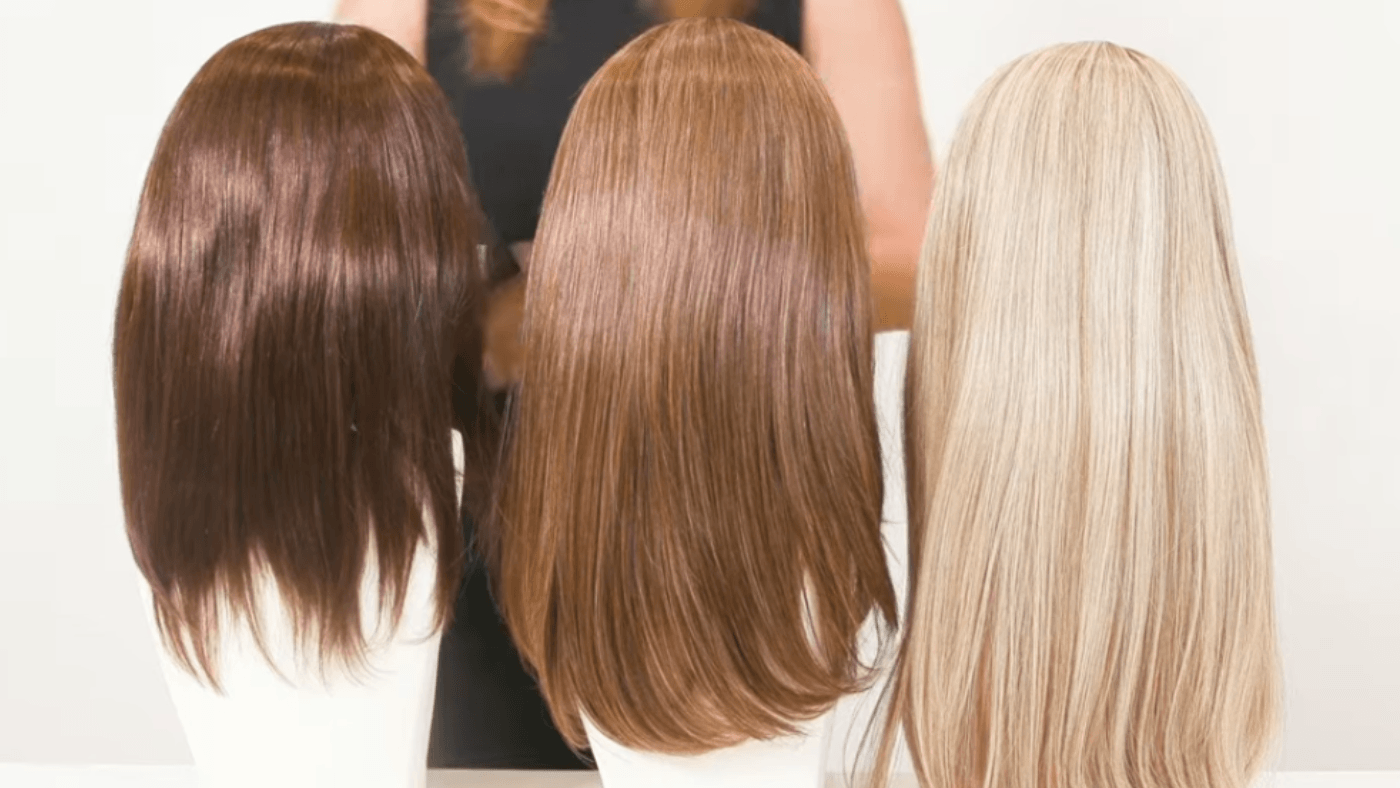
Ladder one: the hair
From cheapest to dearest:
Standard synthetic — fiber with a style permanently heat-set into it. Can’t be restyled. Holds its shape brilliantly and costs very little.
Heat-friendly synthetic — fiber you can put a low-heat tool near. More flexible, slightly shorter working life, because heat is hard on fiber.
Non-Remy human hair — real hair, but with cuticles running in mixed directions. It tangles. Most cheap “human hair” wigs sold online are this, and it’s the reason so many people wrongly conclude human hair is overrated.
Remy human hair — every strand collected and kept facing the same way, cuticle intact. Less friction between strands means dramatically less matting at the nape. Everything in our Remy wig range is this.
European hair — finer strands, naturally lighter shades, genuinely scarce.
Ladder two: the base
This is where the money actually goes, and it’s the ladder most buyers ignore completely.
Machine-wefted — rows of hair sewn onto a cap by machine. Fast, cheap, durable. Looks fine from the front, obvious at the part.
Mono top — a fine mesh panel at the crown so hair appears to grow out of the scalp. Our New Roma uses one at $400.
Lace front — a strip of fine lace at the hairline so the front edge disappears against skin. You can wear the hair back off your face.
Hand-tied throughout — every strand knotted individually into the cap by hand. Moves like growing hair, weighs less, breathes better. Every wig in our Hera collection is built this way.
French top and under-knotting — the finishing move. Knots are tied from underneath so nothing sits visibly on the surface of the parting.
Ladder three: the finishing
Bleached knots, a polyurethane perimeter for a flush edge, adjustable or reinforced bases, lighter density at the temples where real hair is finest. Small things. They’re the difference between “that’s a nice wig” and nobody registering it as a wig at all.
The rule that follows from this: climb the base ladder before the hair ladder. A hand-tied synthetic reads as more convincing than a machine-wefted human hair wig — every time. And a hand-tied Remy beats both by a distance.
Is a cheap wig a false economy?
The upfront gap is real, and we’re not going to pretend otherwise. A $950 hand-tied Remy wig against a $555 synthetic lace front is a meaningful difference at the checkout.
Over a year or two of daily wear, that gap closes. Then it reverses.
Worn every day, a synthetic wig lasts 6–9 months. A hand-tied Remy wig lasts 12–24+ months. So across two years you’d be buying three or four of the synthetic, and one or two of the Remy.
| Hand-tied lace front wigs | Upfront | Wigs bought in 2 years | 2-year total |
|---|---|---|---|
| Sophia — synthetic | $555 | 3–4 | $1,665–$2,220 |
| Olivia Hope — Remy | $950 | 1–2 | $950–$1,900 |
The wig that looked $395 dearer in the basket is the cheaper of the two by the end of the second year — and it looked considerably better for most of that time.
Stretch the horizon further and the case gets stronger again. The Hera collection is where this logic ends up: hand-tied throughout in multi-tone Remy, with the longest working life of anything we make. Because every knot went in by hand, a Hera can be re-knotted and refreshed rather than replaced when it eventually softens. It’s built to be bought once and kept, which makes it the strongest long-term buy we offer for anyone wearing a wig every day.
There’s also a cost that never appears in any calculation, and it’s the one we’ve watched play out for decades. Someone buys an inexpensive wig, wears it for a fortnight, catches sight of the parting under office lighting, and quietly stops wearing it. It cost $110 and delivered fourteen days. No sum predicts that, because every one of them assumes you’ll happily wear the thing daily until it falls apart.
So the question worth asking isn’t only what a wig costs. It’s whether you’ll still be reaching for it in month six.
Here’s what the money actually buys.
Machine-wefted synthetic $110–$400 | Hand-tied synthetic $400–$555 | Hand-tied Remy human hair $950+ | |
|---|---|---|---|
| The parting | Knots visible on the mesh | Under-knotted, reads as scalp | Under-knotted, reads as scalp |
| Weight | Heavy — wefts stack up | Light | Lightest |
| Movement | Falls one way from a fixed seam | Knots pivot | Knots pivot |
| Restyling | Fixed — style is heat-set in | Limited, low heat only | Cut, colored and curled like your own |
| How it ages | Fades from month two or three | Fades from month three | Holds its look until near the end |
| Lifespan, daily wear | 6–9 months | 6–9 months | 12–24 months, longer if rotated |
| When it’s worn out | Replace it | Replace it | Can be re-knotted and refreshed |
Two of those rows matter more than the others.
How it ages. Synthetic doesn’t fail on a date — it fades. The fiber loses its finish, the ends frizz where your collar rubs, the shine goes flat and faintly plasticky. You get a few good months, then a long stretch of wearing something that looks tired but isn’t worn out enough to justify replacing. Remy hair looks much as it did on day one until fairly near the end.
What happens when it finally goes. A machine-wefted cap is finished. A hand-tied piece can be re-knotted and refreshed, because it was built by hand in the first place. That’s the difference between something serviceable and something disposable.
Cheap wigs aren’t cheap. They’re cheap to buy.
What you’re actually paying for
The parting
The single biggest tell, and the first thing people clock. On a wefted cap you can see the knots — tiny dark dots sitting on the mesh, which is why cheap wigs look like they have a slightly dirty scalp. Under-knotting hides the knots beneath the base, so the parting reads as skin. It’s the most labor-intensive part of the build and the reason hand-tied pieces cost what they do.
Weight
Cheap caps are heavy. Wefting stacks hair in rows and rows add grams. Hand-tying distributes the same hair across the whole base. Over a nine-hour day the difference isn’t subtle — it’s the difference between forgetting you’re wearing it and taking it off in the car park.
Breathability
Fewer wefts, more airflow. If you’ve ever given up on a wig by 2pm in July, the cap was the problem, not you.
Movement at the roots
Hand-tied knots pivot. Wefted hair falls in one direction from a fixed seam, which is why budget wigs have that faintly helmet-ish set. You notice it most in profile, and in wind.
Tangling at the nape
Remy hair with aligned cuticles doesn’t matt where your collar rubs. Non-Remy human hair does, usually within weeks, and no amount of conditioner reverses it.
Color depth
Cheap wigs are dyed one flat tone. Better wigs are blended from several shades with darker rooting at the base, because real hair is never one color. Every wig in the Hera range is blended this way, and it’s why they hold up under bad overhead lighting — offices, supermarkets, anywhere the light comes from directly above.
Why hand-tying costs what it does
People assume they’re paying for the hair. They’re mostly paying for hands.
On a fully hand-tied cap, a maker knots hair into the base a few strands at a time, thousands of times over, working outward from the crown so the density looks grown rather than uniform. A machine can weft a cap in a fraction of the time. It cannot do this at all.
That’s the price gap, more or less. Not exotic materials — labor, skill and time, from people who have been doing it for decades.
It’s also why hand-tied wigs can be repaired and re-knotted, and wefted ones generally can’t. You’re buying something serviceable rather than something disposable.

What price alone won’t fix
Spending more solves a lot. It doesn’t solve everything, and we’d rather say so.
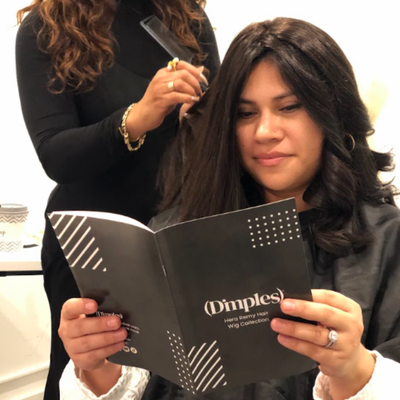
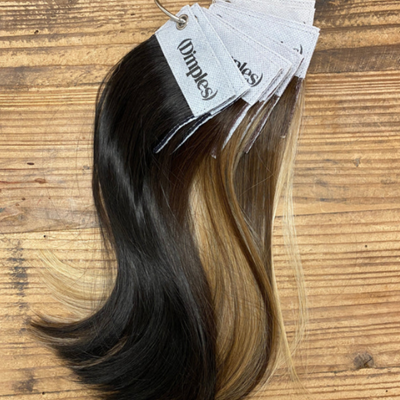
Color match. A $4,700 wig in slightly the wrong shade looks more obviously wrong than a $950 wig in exactly the right one. What people’s eyes catch is contrast against your skin and brows, not fiber quality. Use our free color match service before you spend anything at all. It costs nothing and it’s the single highest-impact decision in this whole process.
Fit. A cap that’s too large shifts; too small gives you a headache. Neither is a price problem. A free virtual consultation sorts this in about ten minutes.
Sunlight. Human hair has no follicle feeding it pigment, so UV lifts the color and it stays lifted. A $3,000 wig fades in strong sun much like a $300 one. Worth knowing before a beach holiday.
Care. Friction is what kills wigs — collar rub, brushing, pillow. Care determines lifespan more than price does, and a badly treated Remy wig will not outlast a well-treated synthetic. Our wig washing guide is ten minutes well spent.
Why regular wearers end up with two
Almost everyone who wears a wig daily for more than a year arrives at the same setup, and it’s worth arriving there deliberately rather than by accident.
Rotation roughly doubles the life of both wigs. Two hand-tied Remy pieces alternated will each outlast a single one worn every day, because neither is under constant friction and both get proper drying time between wears. Two wigs lasting three or four years each beats one wig lasting eighteen months, and the total spend works out lower.
And there’s a weather argument. Synthetic holds its style through rain and humidity better than human hair does, because the style is heat-set into the fiber rather than styled into it. A lot of our customers wear Remy through most of the year and keep a good synthetic for humid weeks, travel, and the gym. That’s not a downgrade — it’s keeping the expensive piece out of the situations that age it fastest.
When to spend less
We’d rather sell you the right wig than the dearest one.
During chemotherapy. Hair usually starts returning within a few months of the last cycle. A wig built for two years of daily wear is over-specified for a nine-month window, and the money is often better spent on comfort and a second option. Our guide for cancer patients covers timing, cap comfort and insurance.
For occasional wear. A wig worn twice a month lasts years regardless of construction. The case for premium is built on daily wear. Take the daily part away and it softens considerably.
For a color you’d never commit to. Fancy copper at 45? Buy a synthetic. That is genuinely what they’re for, and it’s a cheap way to find out you love it.
Outside those three, if you’re wearing a wig most days, buy the best base you can afford. It’s the decision people tell us they wish they’d made sooner.
So what should you actually buy?
| If this is you | Start here | Rough spend |
|---|---|---|
| Occasional wear, or trying a new color | Synthetic wigs | $110–$400 |
| Want realism but not ready for human hair | Sophia — hand-tied synthetic lace front | $555 |
| Daily wear, first human hair wig | Olivia Hope — Remy hand-tied | $950 |
| Medical hair loss, sensitive scalp | Liv — Remy hand-tied, medical cap | $2,000 |
| Daily wear, want the best we make | Hera collection | $2,099–$4,700 |
| Fine or fair hair that nothing ever matches | Euro hair wigs | $3,500 |
Between two rows? That’s normal, and it’s exactly what a free consultation is for. No pressure, and we’ll say so if the less expensive one is the better call.
Buying a hair topper instead?
Everything above is about wigs. If you still have your own hair and need coverage at the crown or the part, you want a hair topper — and the price logic runs the same way, with one extra factor.
With a topper, the piece has to blend with hair you already have. That raises the stakes on both color match and base construction, because the join is visible in a way a full wig’s never is. A cheap topper with a bulky base sits proud of your own hair and creates a ridge.
Our Clio 12 S is a good illustration of where the money goes: a hand-tied Remy topper with under-knotting and a 1/8″ polyurethane perimeter, weighing 1.3 oz. It’s light enough to disappear into fine hair, which a heavier base simply can’t do.
- Budget-friendly heat-friendly synthetic toppers — $268–$418
- Luxury Remy human hair toppers — $989–$2,189
- First-time buyer kits
- How to choose your topper size
The honest summary
Expensive wigs are better at three things that matter every single day: the parting looks like scalp, the weight disappears, and the hair moves properly. Those aren’t marketing distinctions. They’re the difference between a wig that gets looked at and one that doesn’t.
The upfront gap is real. Set against the synthetic wigs people actually buy when they want realism, it closes within two years of daily wear, and then it reverses.
What they don’t fix is color match or fit. So spend in this order: get matched, get measured, then buy the best base you can afford. A well-made $950 wig in exactly your shade beats a $3,000 wig in nearly-your-shade, every time.
Hair loss isn’t a failing. Buying something well made to deal with it isn’t an indulgence either.
Frequently asked questions
Why are some wigs $100 and others $4,000?
Almost entirely construction and labour. A $100 wig is machine-wefted synthetic made in minutes. A $4,000 wig is Remy or European human hair knotted into the cap by hand, a few strands at a time, over days. The hair matters, but the hours matter more.
Do expensive wigs look more natural?
Yes, and mostly because of the cap rather than the hair. Hand-tied bases, under-knotted partings and lace fronts are what make a wig hard to spot. A hand-tied synthetic looks more convincing than a machine-wefted human hair wig.
How long does an expensive wig last compared to a cheap one?
With daily wear, expect 6–9 months from a synthetic wig and 12–24 months from a hand-tied Remy human hair wig, longer again if you rotate two. Synthetic also fades before it fails — the fibre loses its finish months before the wig is worn out — while Remy hair holds its look for most of its life.
Are expensive wigs cheaper in the long run?
The upfront difference is real, but it narrows fast and often reverses. Worn daily, a synthetic wig lasts 6–9 months against 12–24 for a hand-tied Remy, so over two years you’d buy three or four of the first and one or two of the second. A $555 synthetic lace front comes to $1,665–$2,220 across those two years; a $950 Remy wig of the same construction comes to $950–$1,900.
Is Remy human hair worth the extra money?
For daily wear, yes. Aligned cuticles mean far less tangling at the nape, and you can heat-style, colour and cut it like your own hair. For occasional wear, the difference rarely justifies the cost.
What’s the minimum I should spend on a wig I’ll wear every day?
Around $950 for a hand-tied Remy wig is where daily wearers stop thinking about it. Below that, prioritise a hand-tied or mono top base over human hair — construction buys more realism per dollar than fibre does.
Do more expensive wigs need more maintenance?
Different, not more. Human hair needs washing, conditioning and proper air-drying, much like your own. Synthetic needs fibre-safe products and no heat unless it’s heat-friendly. Human hair tangles less day to day, so the routine is often lighter than people expect.
About the Author
The Dimples Hair Team consists of wig and hair topper specialists with decades of experience in alternative hair and hair loss education. Each article is written or reviewed by our team to ensure accurate, practical guidance informed by real consultation and styling experience.
Hera 15" | Remy Human Hair Lace Front Wig (Hand-Tied)
$4,322.00
Hera 15" is a medium-length Remy human hair lace front wig designed to deliver full coverage, natural movement, and all-day comfort. Ideal for women experiencing hair loss, thinning, or alopecia, it blends luxury craftsmanship with a breathable, lightweight fit. The… read more

Hera 19" | Remy Human Hair Lace Front Wig (Hand-Tied)
$4,755.00
Hera 19" is made for bold beauty and everyday wear. With flowing 19" of Remy human hair and a seamless lace front, this hand-tied wig gives you freedom to move, part, and style — all without compromise. PerFit® Cap Construction:… read more

Sophia | Synthetic Hair Lace Front Wig (Hand-Tied)
$800.00
Color Shown: Honey & Cream Rooted (14/22R) Features: Hair Type: Synthetic Hair (Not heat-friendly) Hair Length: 10-28cm Cap Size: 52.7cm Base Type: Lace Front Wig Silk mono-top Hand-tied with silicone grip Weight: 89g … read more

Lucy | Synthetic Hair Lace Front Wig
$577.00
**Color Shown: Honey & Cream Rooted (14/22R) Features: Hair Type: Synthetic Hair | Monofilament | Top/Lace Front Hair Length: 6.6cm-19cm Cap Size: 54cm Base Type: Lace Front Mono Silk Top Non-Slip Silicone Grip Machine Made Back Weight: 84g … read more