







Remy human hair wigs are a real investment — in money, time, and emotional energy. They deserve more than a quick scroll through product listings. This is a buying guide for the woman who's done the early research and now wants the details that actually matter before she commits.
Table of Contents
- What Is Remy Human Hair?
- Why Construction Matters as Much as the Hair Itself
- Remy vs. Synthetic — The Short Version for Buyers
- How Long Will It Actually Last?
- Maintenance — What You're Actually Signing Up For
- How to Choose — A Practical Framework
- A Note from Dimples
- Frequently asked questions
- Ready to Find Your Match?
What Is Remy Human Hair?
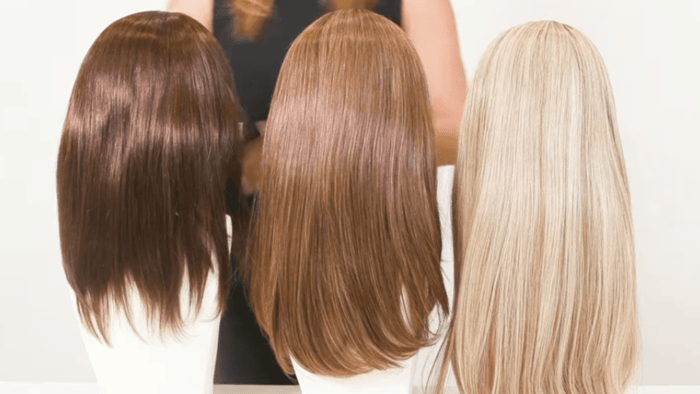
Remy is a quality standard, not a brand. It refers to human hair that's been collected with the cuticles intact and aligned in one direction — root to tip — rather than stripped or randomly mixed during processing.
That last part matters more than it sounds. Hair cuticles all running the same direction means less friction between strands, which means less tangling, more natural movement, and a texture that holds up over time. It's why Remy hair feels different the moment you touch it.
The alternative — non-Remy human hair — is typically acid-treated to strip the cuticle, then coated in silicone to restore softness. It can look fine initially. After several washes, once that silicone wears off, you start to see why the price was lower.
What About Virgin Human Hair?
Virgin means the hair has never been chemically processed — no color, no treatment, nothing. It's the top tier and priced accordingly. High-quality Remy that's been lightly processed for color matching is an excellent choice for most wearers without the full premium.
Why Construction Matters as Much as the Hair Itself
The fiber is only half the equation. How a wig is built determines how it fits, how long it lasts, and whether the part looks real or looks like a wig. These are the terms worth knowing.
Hand-Tied Caps

In a hand-tied wig, each hair strand is individually knotted onto the cap by hand. It's labor-intensive, which is reflected in the price. The result is hair that moves in every direction — the way your own hair does — with a softer, more flexible cap against the scalp.
Machine-wefted wigs have hair sewn into horizontal strips attached to the cap. More durable, more affordable, more limited in movement. Most quality wigs use a combination — hand-tied at the crown where natural movement is most visible, machine-wefted at the sides and back for structure.
Monofilament Tops
The monofilament top is a sheer, skin-like material at the crown where each hair is individually hand-tied. Because you can see through it to the scalp beneath, it creates the illusion of natural hair growth at the part.
If you've worn a wig where the part looked flat or obviously artificial — this is the construction detail that fixes that.
Silk Base
A silk base goes one step further. Hair is knotted beneath a thin layer of silk, which hides the knots entirely. What you see at the part looks like hair growing directly from skin. It's the most realistic part available in wig construction, and it's one of the clearest differences between a wig that looks expensive and one that looks real.
Lace Front
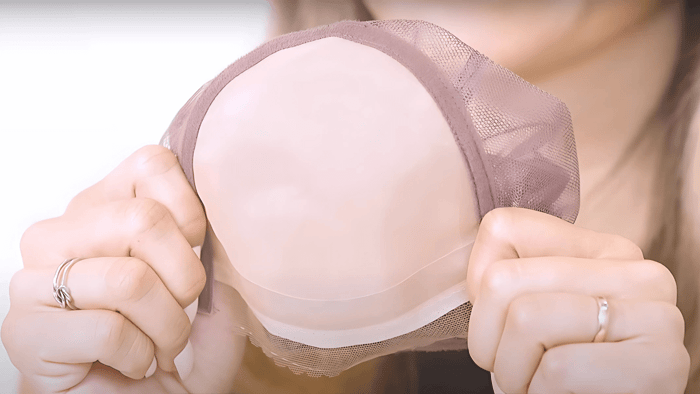
A lace front wig has a sheer lace panel along the front hairline with hair hand-tied into it. The result is a perimeter that appears to grow from the scalp rather than sitting on top of it. It allows you to wear your hair off your face, sweep it back, or vary your part — without the hairline giving anything away.
Remy vs. Synthetic — The Short Version for Buyers
| Remy Human Hair | Synthetic | |
|---|---|---|
| Appearance | Most natural | Good to very good |
| Heat styling | Full flexibility | Limited or none |
| Lifespan (daily wear) | 1–3+ years | 4–6 months |
| Maintenance | Wash, condition, restyle | Wash and wear |
| Price | $300–$3,000+ | $50–$400 |
The cost gap is real upfront. Over a year or two of daily wear, it often isn't — especially when you factor in how many synthetic wigs you'd go through in the same period.
How Long Will It Actually Last?
The honest answer: 12–18 months with daily wear and reasonable care. Two years is achievable with rotation. Three years happens but requires real diligence.
What extends the lifespan:
- Rotating between two wigs so neither is worn every single day
- Washing only when needed — not on a schedule
- Air drying on a wig stand rather than blow-drying when possible
- Using heat protectant whenever heat is involved
- Storing properly when not in use
What shortens it faster than anything:
- Sleeping in it
- Overwashing
- High heat without protection
- Products with alcohol or harsh sulfates
Maintenance — What You're Actually Signing Up For
Remy human hair wigs need to be styled after washing. That's the main trade-off versus synthetic, and it's worth being clear-eyed about before you buy.
Washing: Every 8–15 wears for daily wearers. Sulfate-free shampoo, gentle handling, no scrubbing.
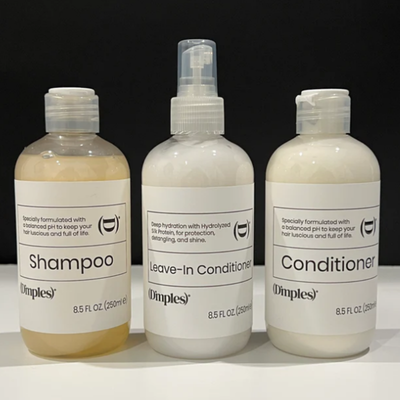
Conditioning: A leave-in or occasional deep conditioning treatment keeps the hair manageable and extends its life. Remy hair benefits from hydration the same way your own hair does.
Styling: After washing, the style needs to be reset. Low heat, heat protectant, wig stand for drying when time allows.
Storage: On a wig stand when not being worn. This one step alone makes a noticeable difference in how long the wig holds its shape and style.
Professional care: An occasional professional cleaning or trim from a stylist who works with wigs is worth budgeting for. Not mandatory, but it shows.
How to Choose — A Practical Framework
Coverage first. Full hair loss means a full wig. Crown or top thinning with hair on the sides means a topper is likely the better fit — and a more seamless one.
Budget realistically. Quality Remy wigs start around $400–$600. Construction details like silk base and full hand-tying push the price higher. Factor in care products. A higher upfront investment in something well-made consistently outperforms buying cheaper pieces repeatedly.
Match construction to priorities:
Most natural-looking part → silk base or monofilament top
Natural hairline, flexibility to wear hair back → lace front
Softest feel, most natural movement → hand-tied cap
Balance of quality and value → hand-tied crown with machine-wefted sides
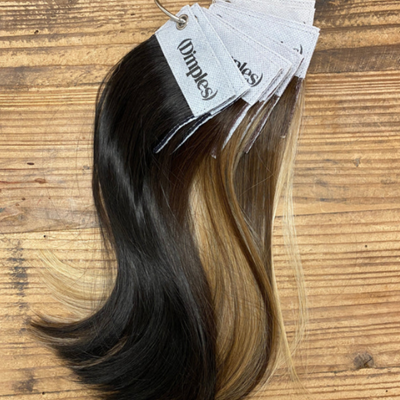
Color and density matter more than most people expect. A wrong color match or a density that doesn't suit your natural hair will undermine even excellent construction. Get this right and everything else tends to fall into place.
Get a consultation before you spend. Especially for a first human hair wig, or if you're buying for hair loss. The right guidance upfront saves money, time, and the frustration of an expensive mistake.
A Note from Dimples

Dimples has been handcrafting wigs since 1968. That's not a detail we mention to fill space — it's the context behind how we approach this product. For most of our customers, a wig isn't an accessory. It's something they put on every morning. We've spent over 50 years understanding what that actually requires.
Frequently asked questions
What are the best wigs for women with thinning hair?
For crown or top thinning, a Remy human hair topper with a silk or monofilament base is usually the most natural-looking option. For more extensive hair loss, a full hand-tied wig with a lace front and silk or mono top provides the most realistic result.
What is the difference between a silk base and monofilament topper?
Both create a natural-looking part. With monofilament, you're seeing through to the scalp beneath the sheer material. With a silk base, the knots are hidden under a silk layer, so all you see is what appears to be hair growing directly from skin. Silk base is the more premium of the two.
Can I color a Remy human hair wig?
Yes — by a professional stylist experienced with wigs. Going darker is lower-risk than lightening. Bleaching is possible but increases damage risk. If a specific color is important, ordering in the right shade is preferable to altering after the fact.
Are hair toppers detectable?
A well-fitted Remy topper with a silk or monofilament base is very difficult to detect. Color match, density, correct sizing, and placement all factor in. A professional fitting makes a significant difference here.
What density should I choose?
For most wearers — especially those with naturally fine or medium hair — light to medium density (100–130%) looks the most natural. Going heavier can look disproportionate and feel warm during long wear.
Ready to Find Your Match?
Browse Dimples' collection of Remy human hair wigs and toppers, or book a free consultation to talk through what's actually going to work for you.
Hera 23" | Remy Human Hair Lace Front Wig (Hand-Tied)

£4,273.00
Meet the longest length in our Remy wig collection: 23 inches of Remy human hair, handcrafted for life, movement, and goddess-tier energy. Why We Love Hera 23": PerFit® for barely-there wear: A hand-tied cap lined with silky-soft comfort—so intuitive, it feels… read more
Hera 19" | Remy Human Hair Lace Front Wig (Hand-Tied)

£2,999.00
Hera 19" is made for bold beauty and everyday wear. With flowing 19" of Remy human hair and a seamless lace front, this hand-tied wig gives you freedom to move, part, and style — all without compromise. PerFit® Cap Construction:… read more
Hera 15" | Remy Human Hair Lace Front Wig (Hand-Tied)

£2,726.00
Hera 15" is a medium-length Remy human hair lace front wig designed to deliver full coverage, natural movement, and all-day comfort. Ideal for women experiencing hair loss, thinning, or alopecia, it blends luxury craftsmanship with a breathable, lightweight fit. The… read more
Hera 8" | Remy Human Hair Lace Front Wig (Hand-Tied)

£1,908.00
Hera 8" is a short Remy human hair lace front wig designed for full coverage with a soft, realistic look and barely-there feel. Perfect for women experiencing hair loss, thinning, or alopecia, it blends luxury craftsmanship with everyday comfort. The… read more